
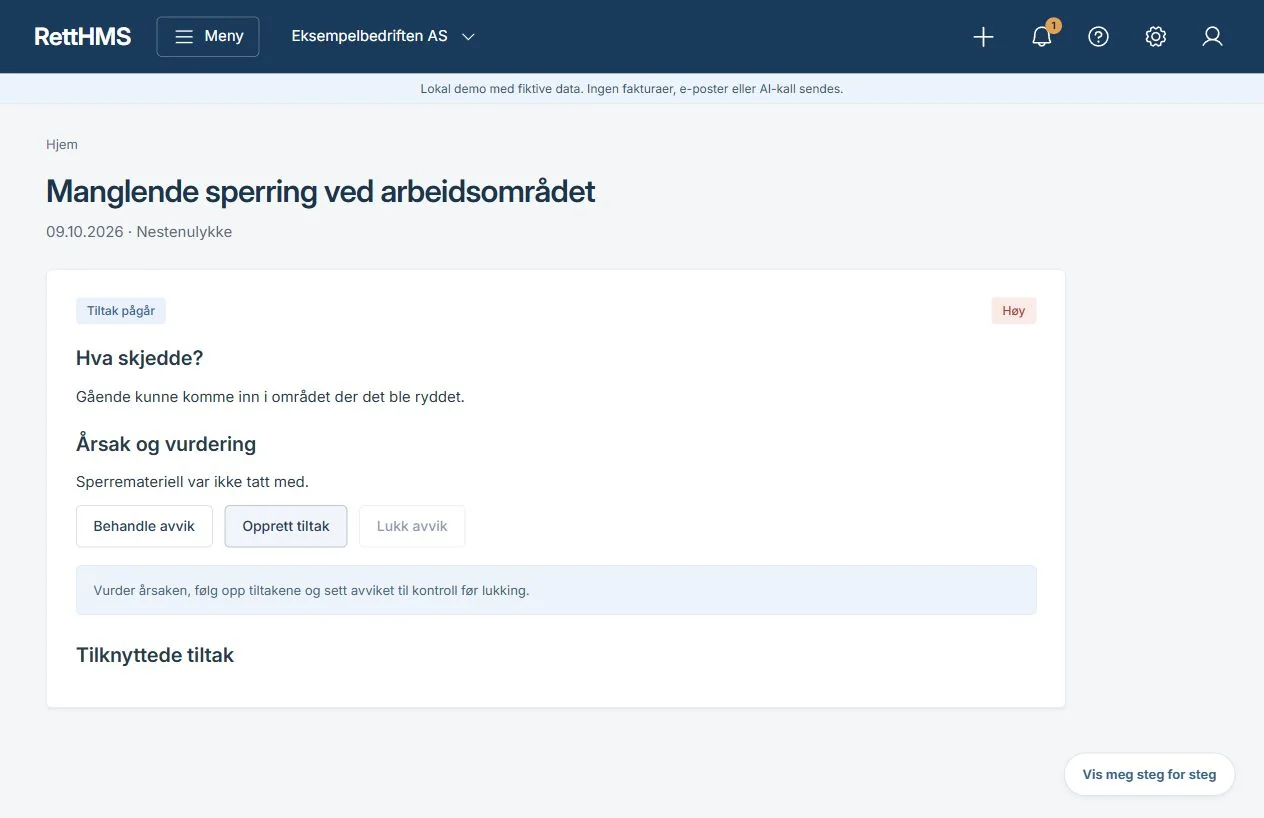
Describe what you actually observed
Record what happened, where and when, and describe relevant conditions. Observations, near misses and quality issues can be followed up without using AI first.
Fictional example: Materials repeatedly block a walkway at an assignment. An employee describes the event and location without filling the case with unnecessary personal information.
Examine the cause and assign follow-up
All active employees can handle ordinary incidents; no separate manager role is required. Record the assessment of the cause and create actions with a named person and due date.
In this example, immediate clearance can be recorded as completed while the reason for repeated obstruction still needs investigation. An action's status must not hide unresolved matters.
Check whether the action works
Completing an action and checking its effectiveness are separate events. Record what was examined during follow-up and explain the decision to close. Reopen the case if the problem returns.
Sensitive cases follow a separate access process. Ordinary operational access does not reveal every restricted detail, and internal incident information does not automatically become customer report content.